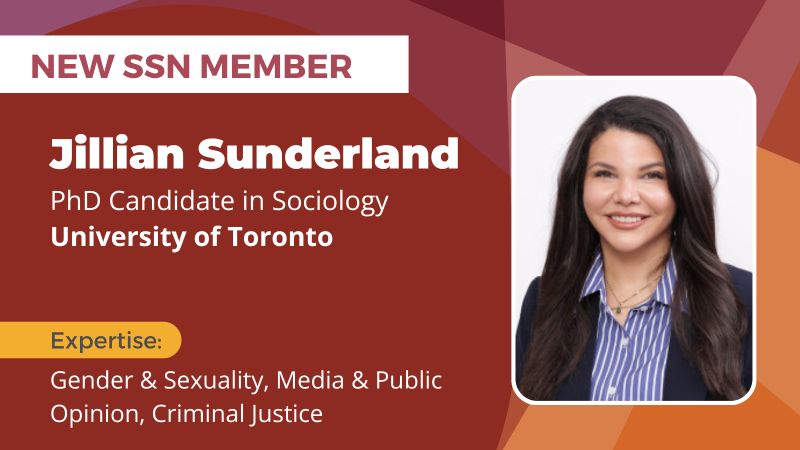
New Member of the Scholar Strategy Network

I’m excited to share that I’ve joined the Scholar Strategy Network.

SSN brings together researchers committed to connecting rigorous scholarship with public and policy conversations. For me, this feels like a natural extension of how I already approach my work: producing sociological research that doesn’t stay confined to journals, but speaks to real institutional problems and public debates.

My research focuses on gender, masculinity, media, and criminal justice—particularly how institutions explain harm, deflect responsibility, and frame violence in ways that shape public understanding and policy responses. Much of my work examines state institutions and elite actors, asking how gendered power operates not just through individuals, but through organizational practices, reports, and official narratives.

I’m looking forward to working with SSN to translate sociological research into accessible, timely insights that can inform public debate and policy decision-making. At a moment when trust in institutions is fragile, I see this kind of bridge-building work as more important than ever.

Grateful to be joining this community.
New Paper on Fatherhood, Masculinity, and Work

I’m excited to share our new paper, “Compromising Fatherhood: Expansion Versus Constriction in Fathers’ Gender Identities and Role Performances,” now published in the Journal of Marriage and Family (JMF)!

Co-authored with Casey Scheibling , this project explores a paradox at the heart of contemporary fatherhood. Many fathers today actively reject “toxic” masculinity and embrace care, emotional openness, and involvement at home—yet still find themselves pulled back into traditional work–family arrangements once everyday routines and institutional pressures set in.

Drawing on in-depth interviews with Canadian fathers, we show how fatherhood often involves both identity expansion and role constriction. To manage the tension between who they feel they are as men and how they act as fathers, many participants make what we call identity–behavior compromises—narrative and practical strategies that help reconcile ideals of gender equality with persistent inequalities in practice.

This paper contributes to ongoing debates about caring masculinities, gender equality, and the limits of cultural change without structural transformation. Even in a context with relatively strong parental leave policies, masculine work norms continue to shape family life in powerful ways.

I’m deeply grateful to Casey for being such a thoughtful collaborator, and to everyone who offered feedback along the way.

https://doi.org/10.1111/jomf.70051

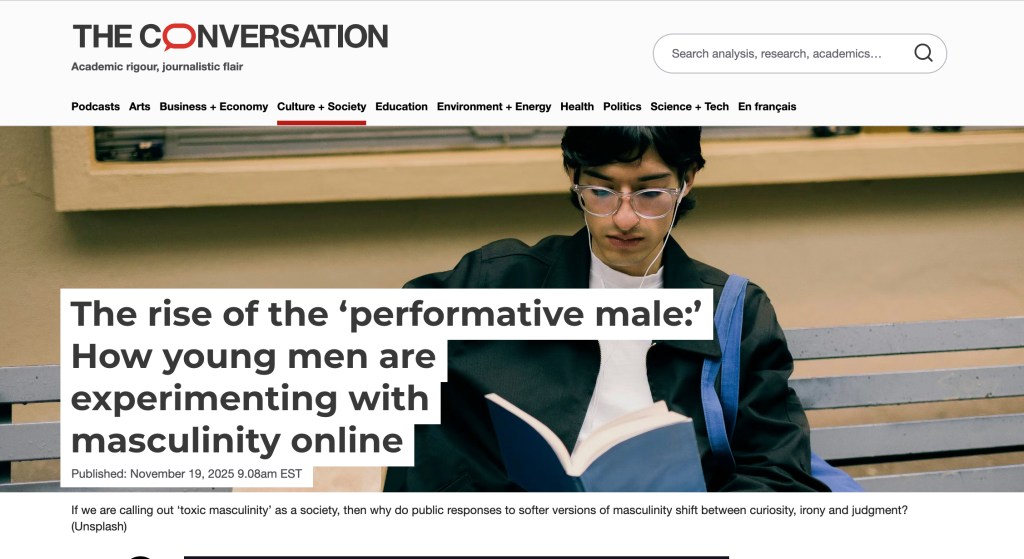
The rise of the ‘performative male:’ How young men are experimenting with masculinity online – Recent Pub!

I’m excited to share my first article for The Conversation Canada, where I explore how young men are experimenting with softer, more emotionally expressive forms of masculinity online.

The piece looks at a real tension:  even as the media critiques “toxic masculinity,” men experimenting with softer or more emotionally open personas online still face pushback and suspicion.

To make sense of this, I draw on the idea of hybrid masculinity, which examines how men blend tenderness with familiar forms of privilege, and the concept of undoing gender, which highlights the creative, sometimes messy ways people try to disrupt gender norms. Together, these ideas show why this TikTok-era shift is both promising and complicated, and why our reactions to it matter.

Grateful for the opportunity, and curious to hear what this resonates with for others working on gender and media.

https://theconversation.com/the-rise-of-the-performative-male-how-young-men-are-experimenting-with-masculinity-online-268742

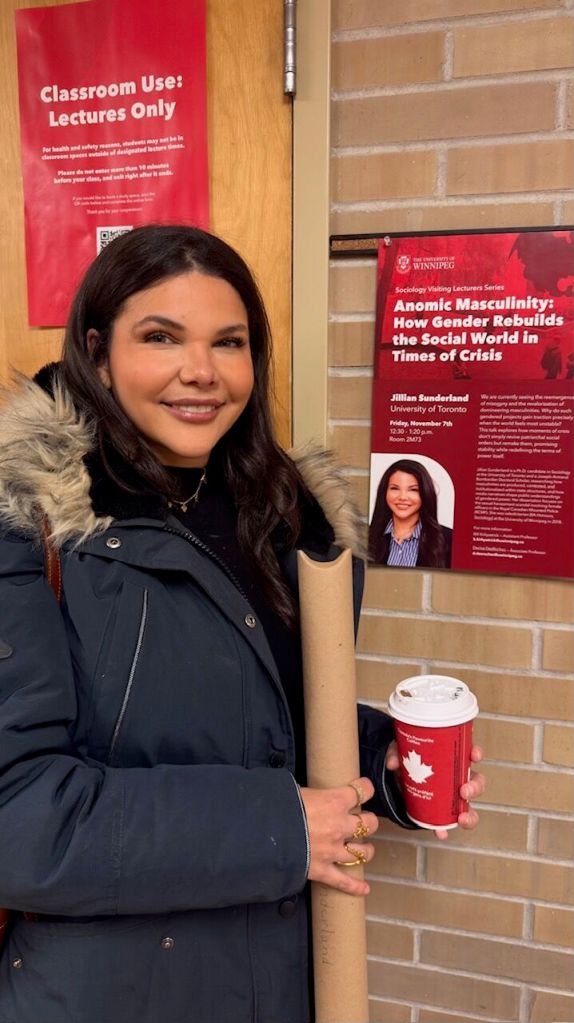
Gendered Power and Social Breakdown: Annual Visiting Lecture at University of Winnipeg

Grateful for such a warm reception at the The University of Winnipeg today!

I had the chance to share my talk “Anomic Masculinity: How Gender Promises to Rebuild the Social World in Times of Crisis,” exploring how gendered power is used to re-constitute the social order during moments of institutional and social breakdown.


Thank you to everyone who came, engaged, and asked such thoughtful questions—it’s always moving to see how these conversations resonate.